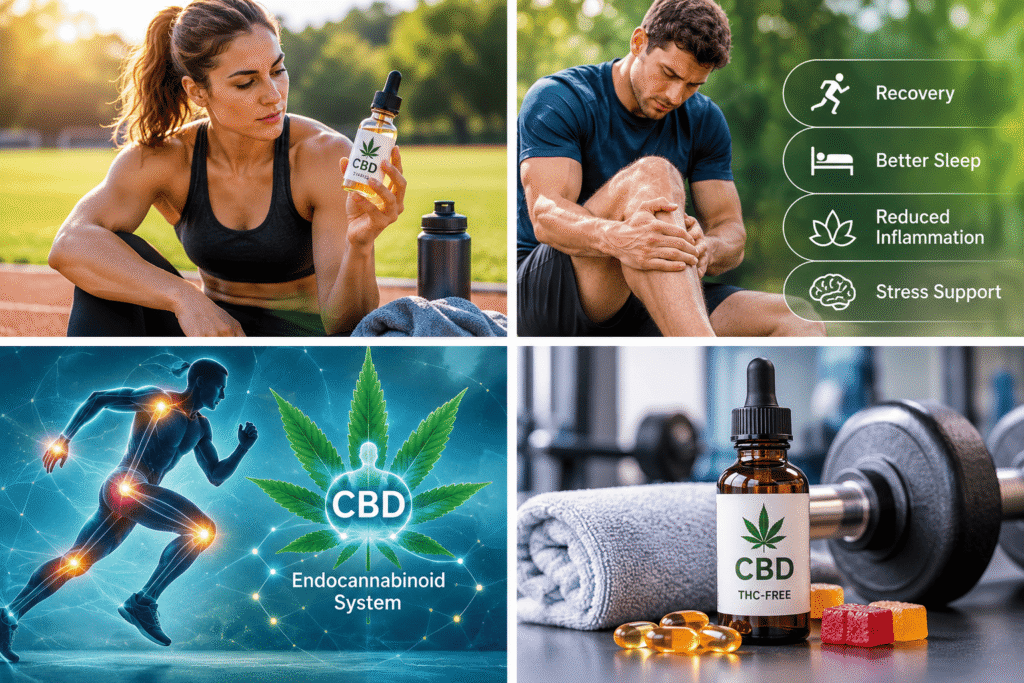
Athletes are constantly looking for ways to improve their performance, recover faster, sleep better, and maintain their physical and mental well-being. Alongside traditional approaches such as proper nutrition, strength training, hydration, and adequate rest, some athletes have become interested in cannabidiol (CBD).
CBD is a naturally occurring compound found in the hemp and cannabis plants. Unlike tetrahydrocannabinol (THC), it does not produce the characteristic intoxicating high associated with cannabis. Its growing popularity has led athletes, fitness enthusiasts, runners, and gym-goers to explore whether it could have a role in their training and recovery routines.
But can CBD actually improve athletic performance? Does it help with post-workout soreness, sleep, or exercise recovery? And is it safe for professional athletes?
Although early research has generated interest in CBD and exercise, the scientific evidence remains limited. Some studies have explored its potential effects on sleep, pain perception, inflammation, and recovery, but researchers have not established that CBD improves strength, endurance, stamina, or overall athletic performance.
In this guide, we’ll explore what athletes should know about CBD, its potential benefits, the latest scientific research, possible risks, and important considerations before using CBD products.
What Is CBD and How Does It Work?
Cannabidiol, commonly known as CBD, is one of the naturally occurring cannabinoids found in Cannabis sativa plants. Hemp is a variety of Cannabis sativa that is commonly cultivated for its fiber, seeds, and cannabinoid content.
CBD interacts with several biological systems in the human body, including the endocannabinoid system (ECS).
The endocannabinoid system is involved in regulating several physiological processes, including:
- Sleep and wake cycles
- Mood and emotional responses
- Pain signaling
- Immune system activity
- Stress responses
- Appetite and metabolism
The ECS includes cannabinoid receptors, naturally produced endocannabinoids, and enzymes responsible for breaking down these compounds.
Unlike THC, CBD does not produce its effects primarily by strongly activating the CB1 receptors responsible for cannabis intoxication. Instead, it interacts with several molecular targets and may influence signaling pathways involved in different physiological processes.
This is one reason researchers are interested in studying CBD’s possible effects on sleep, discomfort, stress, and inflammation.
However, biological activity does not automatically translate into meaningful benefits for athletes. More human research is necessary to understand whether these mechanisms produce measurable improvements in athletic recovery or performance.
Potential Benefits of CBD for Athletes
Athletes put considerable physical demands on their bodies. Intense training sessions, repetitive movements, competitions, and insufficient recovery can contribute to muscle soreness, fatigue, sleep disturbances, and physical discomfort.
CBD has attracted attention because of its possible relationship with some of these issues.
Here are several areas researchers are investigating.
1. CBD and Muscle Recovery
Muscle recovery is an essential part of athletic training. After demanding workouts, the body needs time to repair and adapt to the physical stress placed on muscles.
Resistance training, sprinting, endurance exercise, and other demanding activities can cause temporary muscle soreness and fatigue.
Because CBD has demonstrated biological activity in pathways associated with inflammation and pain signaling, researchers have investigated whether it could influence post-exercise recovery.
Some athletes use CBD oils, capsules, or topical products as part of their recovery routines. However, personal experiences should not be confused with scientifically established results.
A randomized, double-blind, crossover study published in 2024 examined CBD supplementation in well-trained athletes following an intensive training protocol.
The researchers investigated performance measures and biological markers associated with muscle damage and inflammation. The study involved 17 participants and compared CBD products with a placebo.
The findings did not establish a clear recovery or performance advantage from CBD supplementation.
This means athletes should not assume that taking CBD after exercise will accelerate muscle repair or shorten recovery time.
What athletes should know: CBD is being investigated for its potential role in recovery, but current research does not establish it as an effective muscle recovery supplement.
2. CBD for Post-Workout Muscle Soreness
Delayed-onset muscle soreness (DOMS) is the discomfort and tenderness that can develop after unfamiliar or particularly intense physical activity.
It commonly appears several hours after exercise and may become more noticeable during the following one to three days.
Athletes and fitness enthusiasts often look for ways to manage this discomfort without disrupting their training schedules.
CBD creams, balms, and gels are sometimes marketed for post-workout soreness. These products are applied directly to the skin and may contain additional ingredients such as menthol or botanical extracts.
CBD is being investigated for its possible effects on pain-related signaling, but evidence that topical CBD meaningfully reduces exercise-induced muscle soreness remains limited.
A randomized, double-blind, placebo-controlled pilot study published in 2025 examined topical CBD application following a lower-body exercise protocol.
The researchers concluded that topical CBD did not significantly reduce muscle soreness or improve performance in the study participants.
Consequently, CBD creams should not be presented as proven treatments for workout-related soreness.
Athletes can continue using established recovery practices, including appropriate rest, gradual training progression, adequate nutrition, and hydration.
3. CBD and Sleep Quality
Sleep is one of the most important components of athletic recovery.
During sleep, the body carries out processes involved in tissue repair, hormonal regulation, memory consolidation, and physical adaptation to training.
Poor sleep can affect concentration, reaction time, motivation, mood, and exercise performance.
Some athletes explore CBD because of its potential relationship with relaxation, stress responses, and sleep.
Researchers are investigating whether CBD could influence sleep-related processes, but the available evidence is not strong enough to establish it as a reliable sleep aid for athletes.
A survey published in 2025 examined CBD use among elite-level Canadian athletes.
Among the 80 athletes surveyed, 38% reported having used CBD. Athletes who used it frequently reported perceived benefits involving sleep and relaxation.
However, this was a self-reported survey, not a controlled experiment. It cannot establish that CBD caused improvements in sleep.
Athletes experiencing persistent sleep difficulties should first examine their training schedules, caffeine consumption, sleep environment, and recovery habits.
What athletes should know: CBD may be of research interest for sleep, but it has not been established as an effective sleep supplement for athletes.
4. CBD and Exercise-Related Stress
Competitive sports can place considerable psychological demands on athletes.
Training schedules, competitions, performance expectations, injuries, and recovery challenges can all contribute to stress.
Some people use CBD because of its potential relationship with the body’s stress and emotional regulation systems.
CBD has been investigated in several areas of mental health research, including anxiety-related conditions. However, evidence from studies involving particular clinical populations cannot automatically be applied to healthy athletes.
A study published in 2024 examined whether CBD could improve the subjective experience of endurance exercise.
The randomized, placebo-controlled trial included 51 recreationally active participants who completed a 10-kilometer outdoor run.
Participants received either CBD or a placebo before exercise.
The researchers found that CBD did not significantly improve exercise enjoyment, perceived exertion, mood, anxiety, or other measured subjective outcomes.
This suggests that athletes should not assume CBD will make demanding workouts feel easier or reduce competition-related stress.
Mental preparation, appropriate training, recovery, and professional psychological support remain important components of athletic well-being.
5. CBD and Inflammation
Inflammation is part of the body’s natural response to physical stress and tissue damage.
Exercise can trigger temporary inflammatory responses that contribute to the body’s adaptation and recovery processes.
CBD has attracted scientific interest because laboratory and animal research suggests that it can influence certain inflammatory signaling pathways.
However, findings from laboratory experiments do not necessarily translate into effective treatments in humans.
For athletes, the distinction is especially important.
Exercise-related inflammation is not always something that needs to be eliminated. Some inflammatory processes are involved in normal training adaptations.
Although CBD is being investigated for its potential influence on inflammatory pathways, there is currently insufficient evidence to conclude that it reduces exercise-related inflammation in a way that improves athletic recovery or performance.
Athletes should be cautious about products marketed with claims that CBD eliminates inflammation or speeds up muscle repair.
6. CBD and General Recovery After Exercise
Athletic recovery involves more than reducing muscle soreness.
It includes restoring energy stores, repairing tissues, managing training fatigue, maintaining hydration, and allowing the body to adapt to physical demands.
CBD is being studied for several biological effects that could theoretically be relevant to recovery.
However, research has not established that CBD improves the overall recovery process following strenuous exercise.
A systematic review published in 2024 examined seven studies investigating CBD and exercise performance or post-exercise recovery.
The researchers found limited and inconsistent evidence. Some physiological measures showed potentially favorable changes, but evidence involving strength, recovery, and other performance outcomes was insufficient.
The review highlighted the need for larger and better-designed studies.
For now, athletes should view CBD as an experimental area of interest rather than an established recovery strategy.
Can CBD Actually Improve Athletic Performance?
This is one of the most important questions athletes should ask before considering CBD.
Athletic performance depends on multiple factors, including:
- Muscular strength and power
- Cardiovascular endurance
- Aerobic capacity
- Speed and agility
- Coordination and reaction time
- Nutrition and hydration
- Sleep and recovery
- Physical and mental preparation
A supplement that improves one of these factors may potentially influence performance, but it needs to demonstrate measurable benefits in properly controlled human studies.
So far, CBD has not been established as an effective performance-enhancing supplement.
A randomized, double-blind, placebo-controlled crossover trial published in August 2025 investigated the acute effects of CBD on endurance exercise in trained runners.
The study included 25 participants who received either a placebo, 50 mg of CBD, or 300 mg of CBD before exercise.
Researchers measured several outcomes, including exercise physiology, perceived exertion, pain, mood, and time to exhaustion.
The results showed that neither CBD dose significantly improved endurance performance or time to exhaustion compared with the placebo.
The researchers concluded that acute CBD supplementation at the tested doses did not meaningfully enhance or impair endurance performance.
This is an important finding because it challenges the marketing claims that CBD can automatically improve stamina or help athletes exercise for longer.
The bottom line: CBD may be an interesting subject for sports science research, but there is currently insufficient evidence to recommend it as a way to increase strength, speed, endurance, or overall athletic performance.
What Does Scientific Research Say About CBD and Exercise?
The scientific understanding of CBD and sports performance is still developing.
Here are some important studies that help explain what researchers currently know.
2024 Systematic Review of CBD and Athletic Performance
A systematic review published in the journal Nutrients examined research involving CBD, exercise capacity, and post-exercise recovery.
The researchers searched major scientific databases and identified seven studies that met their inclusion criteria.
The review reported limited and inconsistent evidence of potential effects on selected physiological measures.
However, the evidence was insufficient to establish meaningful improvements in strength or post-exercise recovery.
The authors emphasized that additional research is needed to understand the effects and safety of CBD supplementation in physically active individuals.
2024 Study on CBD and Endurance Exercise
A randomized, placebo-controlled study published in Sports Medicine – Open investigated whether CBD could improve the subjective experience of endurance exercise.
The study involved 51 recreationally active adults who completed a self-paced 10-kilometer run.
Participants received 150 mg of CBD or a placebo before running.
The researchers found no significant improvements in exercise enjoyment, perceived exertion, mood, anxiety, or running performance.
2024 Study on CBD and Cycling Performance
Researchers also examined whether broad-spectrum CBD supplementation could improve cycling performance.
The randomized, double-blind, placebo-controlled study involved 22 healthy participants.
Participants received either 150 mg of CBD daily or a placebo during a three-week supplementation period.
The study investigated performance during a 10-minute cycling time trial.
The findings did not establish a clear performance-enhancing effect from CBD supplementation.
2025 Study on CBD and Endurance Performance
A more recent randomized controlled trial investigated the effects of 50 mg and 300 mg CBD on trained runners.
The researchers found that neither dose significantly improved endurance performance, exercise enjoyment, perceived exertion, or time to exhaustion.
The findings provide further evidence that CBD should not be marketed as a proven athletic performance enhancer.
Taken together, these studies demonstrate why athletes should approach CBD claims carefully. Although research is expanding, the available evidence does not establish reliable performance or recovery benefits.
CBD Before or After a Workout: Which Is Better?
Athletes sometimes wonder whether CBD should be used before exercise or after completing a training session.
The answer depends on the reason someone is considering CBD, but there is currently no scientifically established timing protocol for athletic performance or recovery.
CBD Before a Workout
Some athletes are interested in taking CBD before exercise because they believe it may help with relaxation or exercise-related discomfort.
However, controlled research has not established that taking CBD before a workout improves concentration, endurance, strength, or exercise enjoyment.
The 2025 endurance study involving trained runners found no significant performance advantage when CBD was administered before exercise.
CBD After a Workout
Other athletes explore CBD after exercise because of its potential relationship with recovery and inflammation.
However, studies have not established that post-workout CBD supplementation accelerates muscle repair or reduces exercise-induced muscle damage.
Is There a Best Time to Take CBD?
There is no established best time to take CBD for athletic performance.
The appropriate approach is to avoid treating CBD as a proven sports supplement and discuss potential use with a qualified healthcare professional, particularly if taking other medications.
Athletes should also consider competition rules and the possibility of THC contamination before using cannabinoid products.
What Are the Different Types of CBD Products for Athletes?
CBD products are available in several forms. Understanding their differences can help consumers evaluate product labels and marketing claims.
1. CBD Oil and Tinctures
CBD oils and tinctures are liquid products that typically contain CBD extract mixed with a carrier oil.
They are commonly sold in bottles with droppers.
Product concentrations vary, and consumers should distinguish the total amount of CBD in the bottle from the amount in an individual serving.
2. CBD Capsules and Softgels
CBD capsules and softgels contain measured amounts of CBD in a convenient oral format.
They are easy to incorporate into a supplement routine, although the amount of CBD per capsule varies between products.
3. CBD Topical Creams and Balms
Topical CBD products are applied directly to the skin.
They are marketed for localized application and are popular among people interested in massage and post-exercise routines.
However, evidence supporting their effectiveness for exercise-induced muscle soreness remains limited.
4. CBD Gummies
CBD gummies are edible products containing measured amounts of CBD.
They are convenient for consumers who prefer not to use oils or capsules.
However, product ingredients, CBD concentrations, and quality can vary significantly.
5. Broad-Spectrum and Full-Spectrum CBD
CBD products are also classified according to the types of compounds they contain.
Full-spectrum CBD: Contains CBD along with other naturally occurring hemp compounds. Depending on the product and applicable legal requirements, it may contain trace amounts of THC.
Broad-spectrum CBD: Contains CBD and other hemp compounds but is generally processed to remove THC. However, consumers should not assume that every product is completely THC-free without independent testing.
CBD isolate: Contains purified CBD with most other hemp compounds removed.
For competitive athletes, the cannabinoid composition of a product is especially important because even small amounts of THC may create anti-doping concerns.
Is CBD Safe for Athletes?
CBD is often marketed as a natural wellness product, but natural does not automatically mean safe.
The safety of CBD depends on several factors, including the amount consumed, product quality, individual health conditions, and interactions with medications.
The US Food and Drug Administration (FDA) has approved one prescription CBD medication for certain seizure disorders. It has not approved ordinary CBD oils, gummies, or creams as treatments for athletic recovery, pain, sleep problems, or performance enhancement.
The FDA has also highlighted several potential safety concerns involving CBD.
These include:
- Liver injury
- Drowsiness and sedation
- Changes in alertness
- Interactions with prescription medications
- Gastrointestinal symptoms
- Changes in appetite
- Potential risks during pregnancy and breastfeeding
CBD may also interact with medications that carry warnings about grapefruit consumption because some of the same drug-metabolizing pathways may be involved.
Athletes taking prescription medications should consult a healthcare professional before using CBD.
People with liver conditions, those who regularly consume alcohol, and individuals taking multiple medications should be particularly cautious.
Can CBD Cause Drowsiness?
CBD may cause sleepiness or sedation in some people.
This is an important consideration for athletes who need to maintain concentration, coordination, and reaction time during training or competition.
Using an unfamiliar CBD product before an important sporting event is not advisable.
Can CBD Affect Liver Health?
Liver-related safety concerns have been identified in clinical research involving prescription CBD.
The risk may depend on the dose, duration of use, individual health, and other medications.
Athletes should not assume that over-the-counter CBD products are free from these risks.
Is CBD Allowed in Professional Sports?
This is an especially important question for professional and competitive athletes.
The World Anti-Doping Agency (WADA) removed cannabidiol from its Prohibited List in 2018.
However, this does not mean that every cannabinoid is permitted.
Under the 2026 WADA Prohibited List, cannabinoids other than CBD remain prohibited in competition.
This includes THC and certain other cannabinoids.
Consequently, athletes using full-spectrum CBD products may face a risk of unintentionally consuming THC.
Product contamination and inaccurate labeling can create additional problems.
Athletes competing under anti-doping rules should:
- Check the latest prohibited substance list applicable to their sport.
- Avoid assuming that a CBD product is automatically competition-safe.
- Review independent laboratory testing certificates.
- Check for THC and other prohibited cannabinoids.
- Consult their team physician or anti-doping representative.
- Understand that athletes may remain responsible for prohibited substances found in their samples.
Third-party certification programs designed for sports supplements can provide additional quality information, but certification does not guarantee that every product is entirely risk-free.
For professional athletes, avoiding nonessential cannabinoid products may be the safest option when the consequences of a positive test are significant.
What Should Athletes Look for When Choosing CBD Products?
For athletes who are considering CBD despite the limited evidence, product quality deserves careful attention.
The CBD market includes products with varying concentrations, manufacturing practices, and labeling standards.
Here are some factors to consider.
1. Independent Third-Party Laboratory Testing
Look for a recent certificate of analysis (COA) from an independent laboratory.
The certificate should identify the product tested and provide information about its cannabinoid content.
It should also include relevant contaminant testing, such as:
- Heavy metals
- Pesticides
- Residual solvents
- Microbial contamination
2. Accurate CBD Content
Check how much CBD the product contains per serving.
For example, a bottle containing 1,000 mg of CBD does not necessarily provide 1,000 mg in each serving.
The total product concentration and serving size should be clearly stated.
3. THC Content
THC contamination is an important concern for competitive athletes.
Products marketed as THC-free should be supported by appropriate laboratory testing.
Even products labeled broad-spectrum should not be assumed to contain absolutely no THC without verification.
4. Transparent Ingredients
Read the full ingredient list.
Avoid products with unclear cannabinoid concentrations, undisclosed ingredients, or exaggerated claims.
5. Reputable Manufacturing Practices
Look for manufacturers that disclose their production processes, testing standards, and quality-control procedures.
Be cautious of companies making promises such as guaranteed muscle growth, instant recovery, or dramatic performance improvements.
No CBD product should be treated as a substitute for evidence-based sports nutrition or medical care.
CBD vs. Traditional Sports Recovery Methods
CBD is not the only option athletes can explore when improving their recovery routines.
Several established practices play an important role in supporting athletic performance.
| Recovery method | Why it matters |
|---|---|
| Adequate sleep | Supports physical recovery and cognitive function |
| Balanced nutrition | Supplies energy and nutrients for tissue repair |
| Hydration | Helps maintain normal physiological function |
| Appropriate training loads | Reduces unnecessary training stress |
| Rest days | Allow recovery between demanding sessions |
| Progressive training | Supports gradual improvements in fitness |
| Professional guidance | Helps identify injuries and recovery problems |
These approaches have a much stronger foundation in sports science than CBD supplementation for performance enhancement.
CBD should not replace proper nutrition, hydration, sleep, or a well-designed training program.
Frequently Asked Questions About CBD for Athletes
1. Can CBD improve athletic performance?
There is currently insufficient scientific evidence to establish that CBD improves athletic performance. Human studies have not demonstrated consistent improvements in endurance, strength, speed, or exercise capacity.
2. Does CBD help athletes recover faster?
CBD is being investigated for its potential effects on inflammation, pain signaling, and recovery. However, current clinical research has not established that it accelerates post-exercise recovery.
3. Can athletes use CBD for muscle soreness?
Some athletes use CBD oils and topical creams for muscle soreness, but research has not established that these products reliably reduce exercise-induced soreness.
4. Is CBD good for runners?
Runners may be interested in CBD because of its potential relationship with sleep, relaxation, and recovery. However, controlled research has not demonstrated a meaningful improvement in endurance performance from CBD.
5. Should athletes take CBD before or after exercise?
There is no scientifically established timing recommendation for CBD use in athletes. Research has not demonstrated reliable performance or recovery benefits from taking it before or after exercise.
6. Does CBD increase stamina or endurance?
CBD has not been established as a supplement that increases stamina or endurance. A randomized trial involving trained runners found no significant improvement in time to exhaustion following CBD administration.
7. Is CBD better than THC for athletes?
CBD and THC are different cannabinoids with different effects. CBD does not produce the characteristic intoxicating effects of THC. From an anti-doping perspective, CBD is permitted under WADA rules, while THC and other prohibited cannabinoids remain restricted in competition.
8. Can CBD help athletes sleep better?
Some athletes report perceived improvements in sleep after using CBD, but self-reported experiences do not establish effectiveness. More controlled research is needed to determine whether CBD improves sleep in athletic populations.
9. Can CBD cause side effects in athletes?
Yes. Potential side effects include drowsiness, gastrointestinal symptoms, changes in appetite, liver-related concerns, and interactions with medications. Product contamination with THC is another concern.
10. Is CBD legal for athletes in the United States?
The legal status of CBD depends on federal and state regulations, product composition, and how the product is marketed. Federal hemp-related rules do not mean every CBD product is FDA-approved or legally marketed for every purpose. Athletes should also distinguish product legality from anti-doping eligibility.
Final Thoughts: Should Athletes Consider CBD?
CBD has become an increasingly discussed topic in sports and fitness communities. Its potential relationship with sleep, pain signaling, inflammation, and recovery has attracted interest from athletes looking for additional ways to support their training routines.
However, the scientific evidence is still developing.
Current human research does not establish that CBD improves endurance, strength, stamina, or overall athletic performance. Evidence supporting faster muscle recovery, reduced post-workout soreness, and better sleep in athletes is also limited.
Athletes interested in CBD should consider its possible side effects, medication interactions, product quality, and anti-doping implications before making a decision.
Most importantly, CBD should never replace the fundamentals of athletic performance: consistent training, balanced nutrition, sufficient sleep, hydration, and appropriate recovery.
As more high-quality human studies become available, researchers may develop a clearer understanding of whether CBD has a meaningful role in sports and exercise.
For now, athletes should approach CBD with realistic expectations and rely on established sports science when making decisions about their health and performance.
Scientific Research and Studies on CBD for Athletes
Recommended description
What does scientific research actually say about CBD and athletic performance? Explore published studies, clinical trials, and scientific reviews examining CBD’s potential effects on exercise recovery, muscle soreness, sleep, and physical performance. These sources also highlight the limitations of current evidence and areas where more research is needed.
- 2024 Systematic Review – CBD and Athletic Performance pubmed.ncbi.nlm.nih.gov+1
- 2025 Randomized Trial – CBD and Endurance Exercise pubmed.ncbi.nlm.nih.gov+1
- CBD and Muscle Recovery – 2024 Study a randomized double-blind crossover study
- FDA – CBD Safety and Potential Risks FDA+1
- WADA – 2026 Prohibited List